
How to Check Criminal History in Waterloo
Begin with the record that matches the question. The Waterloo Police Department is the source for its incident reports, crash files, daily arrest log, and calls-for-service data. An arrest log entry is not a court result. The Black Hawk County jail roster answers whether someone is in county custody now, and Iowa Courts Online shows whether a prosecutor filed a case.
A broad Waterloo criminal history search may need all three layers. Use exact names, an event date, location, case number, or citation number when known. Those details help separate people with similar names and let a clerk locate a report that is not indexed on the public web.
- Check Waterloo Police activity records or contact Information Services for the incident or arrest report.
- Submit the city open-record form with a clear description, date range, location, and case number when available.
- Search the Black Hawk County live jail roster for present custody and intake allegations.
- Use Iowa Courts Online under Black Hawk County to find filed charges, docket events, and disposition.
- Request an Iowa DCI record check when the question extends beyond one Waterloo event.
Waterloo Criminal Record Request Fields
Waterloo's web request form separates required contact details from optional facts that narrow the search. Full name, email, phone, and a description of the information sought are required. A case number, start and end dates, and location area are optional. Giving the optional fields can reduce the risk that staff retrieve the wrong Waterloo police record.
| Form field | Required | Best use |
|---|---|---|
| Full name, email, phone | Yes | Identifies the requester and return channel |
| Information requested | Yes | States the exact Waterloo record sought |
| Case number | No | Points to one police file |
| Start and end dates | No | Limits the time span |
| Location area | No | Helps distinguish similar events |
The official Waterloo open-record request channel is useful when the public activity pages do not supply the underlying narrative or media. Ask for one well-defined product instead of a vague criminal history.
The Waterloo Police Department
Waterloo Police Information Services maintains police records and offers criminal-history checks, verification-of-loss records, crash and incident reports, and computer searches. The unit has a civilian manager and four clerks. Its public counter is at 715 Mulberry Street and opens Monday through Friday from 10 a.m. to 2 p.m. The main records number is 319-291-4340, and requests can also go to records@waterloopolice.com.
The four-hour counter window is easy to miss. Waterloo requesters who cannot visit then still have the city form, email, and phone routes. CrashDocs is a separate route for crash records, which the department says are normally ready five to seven business days after the crash. No official Waterloo police records app was located, so use the agency's web and direct-contact channels.
Waterloo Police Information Services
715 Mulberry St.
Waterloo, IA 50703
319-291-4340
Monday-Friday, 10 a.m.-2 p.m.
Waterloo Criminal Activity in 2025
Waterloo's official 2025 NIBRS summary supplies context for the volume of city records. It reports 5,630 offenses, 3,650 arrests, 8,469 incident reports, and 50,513 calls for service. Within those totals were 265 violent crimes and 2,864 property crimes. These are agency counts for a defined year, not a list of people and not a statement that each call produced a criminal case.
The official Census QuickFacts view for Waterloo also provides a visual source for local scale.
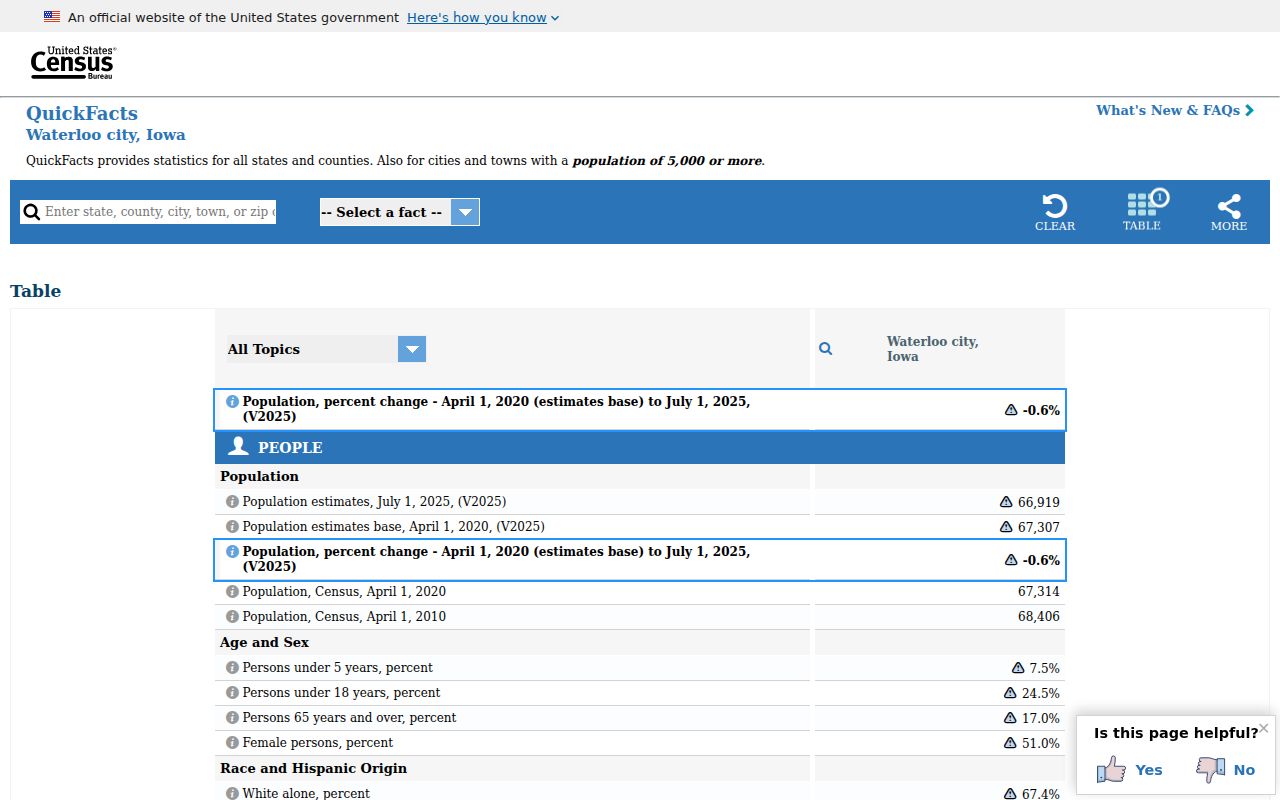
Population context helps explain why Waterloo produces far more police calls and files than the county's smaller cities, but it does not change which office holds a specific record.
Arrests and Bookings in Waterloo
A Waterloo arrest begins as a city police event. If the person is taken into custody, the Black Hawk County Jail at 225 East 6th Street creates a separate booking record. Jail staff receive the legal custody papers, collect identifying information, take fingerprints and a booking photograph, list intake charges and bond, and prepare initial-appearance documents. The police report remains with Waterloo Police.
The county's free Who's In Jail search is current-custody only. It can show the name, booking date and time, charge text, bond, and a no-bond flag. It does not provide the full Waterloo incident narrative, arresting officer's report, court date, disposition, or a public profile page. A missing name may mean release, not that the arrest never occurred.
For deeper county treatment of intake and custody channels, use the Black Hawk County arrest history resource. Waterloo records should still be requested from the city when Waterloo Police initiated the matter.
Reading Waterloo Arrest Log Records
The Waterloo daily arrest log gives the arrested person's name, arrest date, case number, arresting agency, and charge. It is a quick way to identify the event and capture a case number before making a report request. The log is still an allegation record. It cannot establish whether prosecutors filed the same charge, changed it, dismissed it, or obtained a conviction.
Calls-for-service reports answer a different question. They add an incident number, date and time, report type, location, disposition, responding unit or officer, and dispatch, arrival, and clear times. A call may not produce an arrest or a full incident report. Waterloo readers should not treat a dispatch entry, police report, arrest entry, jail booking, and district court case as copies of one record.
- Case number
- The identifier Waterloo Police uses to tie activity and reports to one event.
- Charge
- The alleged offense recorded at that stage, which may change in court.
- Disposition
- The way a court charge ended, such as conviction, dismissal, or acquittal.
- Calls for service
- Dispatch activity that may or may not result in a written criminal report.
Waterloo Municipal Court Records
Waterloo has no municipal criminal court. Iowa replaced fragmented local courts with a unified District Court, so city citations and criminal charges proceed through the Iowa District Court for Black Hawk County. Search Iowa Courts Online first. If a public document is not available there, inspect it at a courthouse terminal or ask the Clerk of District Court at 316 East 5th Street for a copy.
| Court Name | Iowa District Court for Black Hawk County |
|---|---|
| Case Types Heard | Waterloo felony, misdemeanor, traffic, and other state-court matters |
| Case Lookup Channel | Iowa Courts Online, courthouse terminal, or Clerk of District Court |
| What the Docket Shows | Case number, parties, charges, events, disposition, sentence, and financial entries |
| Copies & Fees | Terminal inspection is free; copying and certification may cost extra |
A Waterloo citation may take 14 to 21 days to post. If an early search returns nothing, keep the citation number and try again or contact the clerk. The city police file and court docket remain distinct.
Waterloo Criminal Records Downtown
Waterloo is the county seat, so three major custodians sit within the same city. Police records are at 715 Mulberry Street. County booking records are at the sheriff and jail on East Sixth Street. Filed criminal cases are maintained at the courthouse on East Fifth Street. The short distance can hide a sharp records boundary.
Ask Waterloo Police for its incident narrative or arrest paperwork. Ask the sheriff for jail custody and booking records. Ask the clerk for the judicial file and final disposition. Sending one broad request to the closest office can lead to a partial answer because no custodian owns all three products.
Note: Downtown proximity makes in-person follow-up practical, but it does not merge Waterloo police, county jail, and district court records.
Where Waterloo Records End Up
Waterloo Police creates the first agency record. A custodial arrest adds a Black Hawk County booking entry. If the County Attorney files charges, the clerk opens a district court file. Qualifying arrest and court events are then reported to the Iowa Department of Public Safety, Division of Criminal Investigation, which maintains the state repository.
Record flow: Waterloo Police Department › Black Hawk County Jail and District Court › Iowa DCI Records and Identification Unit
Recent Waterloo activity may appear in the city log before a court outcome exists. The court docket is the source for filed charges and disposition. A DCI check is the broader Iowa product and applies dissemination rules, including limits on some older unresolved arrests when no signed release is supplied.
For a federal sentence, the Federal Bureau of Prisons locator is a separate custody channel.
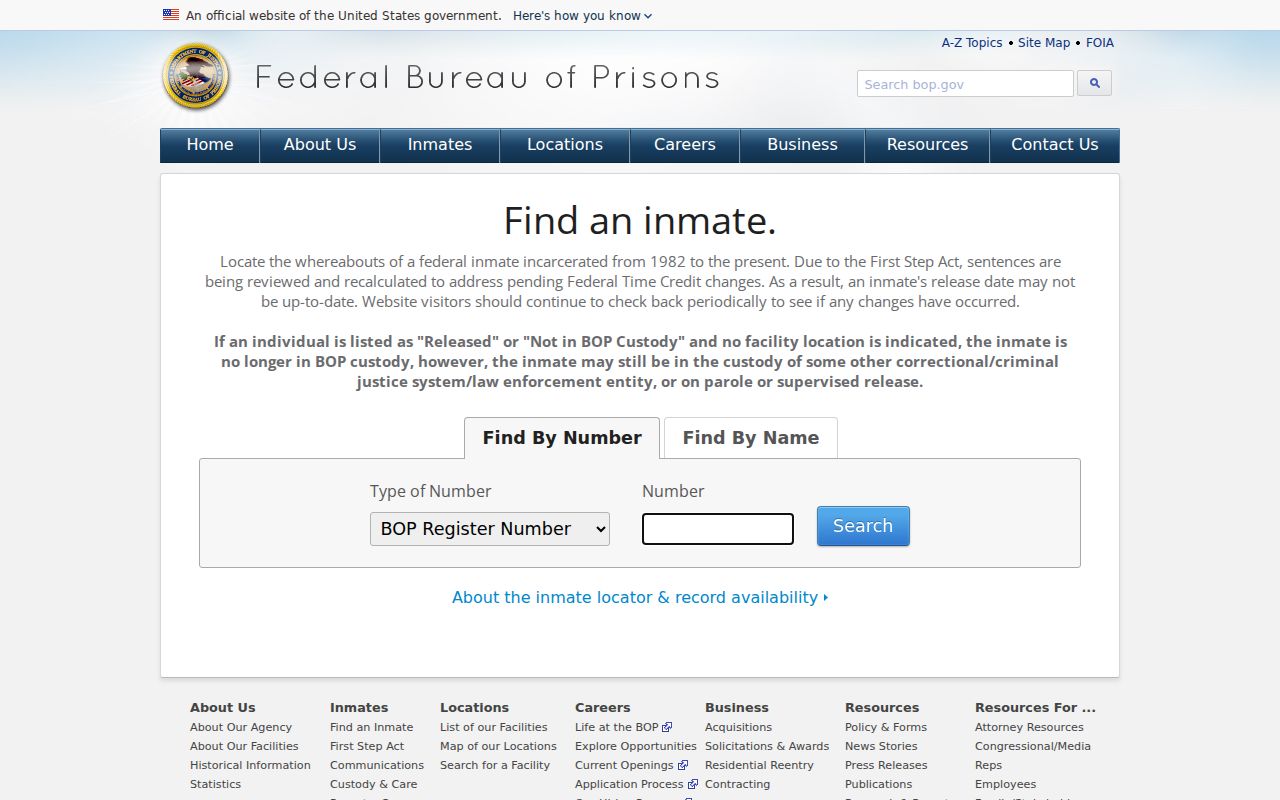
Use that federal source only when a Waterloo matter led to federal custody; ordinary city arrests remain in the local-to-state record flow.
Waterloo Police Record History
The Waterloo Police Department traces its founding to 1868 and lists 14 marshals and 25 police chiefs across its history. It now reports 124 sworn officers and 12 civilian staff serving roughly 70,000 residents. That long institutional history matters to record research because older files may not be exposed through the same tools used for a recent call or arrest.
For a historic Waterloo matter, give Information Services the closest date, address, involved name, and known report number. Ask whether the record remains with the department or has moved to an archive. A modern daily log should not be treated as a complete index to the department's files dating back to the nineteenth century.
Public Access Rules
The Iowa Open Records Law supports inspection and copying of public city records, but it does not make every police detail public. Waterloo may withhold or redact confidential investigative material, juvenile information, victim data, medical facts, and protected personal identifiers. Court sealing and expungement orders can also restrict what appears in a public docket.
Key Statutes:
Iowa Code chapter 22 gives public-record inspection rights and identifies confidential categories.
Iowa Code sections 692.2 and 692.3 govern criminal-history collection and release.
Iowa Code chapter 901C provides limited expungement paths for qualifying matters.
A narrow Waterloo request is easier to review and price. Describe the exact police product, event, date range, and preferred format. If part of a record is confidential, ask whether the public portion can be separated and released.
Verify Waterloo Criminal Record Results
Compare identifiers and dates across Waterloo Police, the county jail, and the district court. Do not infer a conviction from an arrest entry. The filed count can differ from the intake allegation, and a release from jail says nothing by itself about how the case ended. A court disposition is the key result for a prosecuted matter.
For Waterloo records, compare the Waterloo case number with the county court number rather than expecting them to match. The Waterloo police identifier follows the agency event, while the clerk assigns a new number to the judicial case. Recording both numbers makes later Waterloo requests more precise.
When a Waterloo record appears wrong, start with the office that created it. Police correct their own report systems, the clerk addresses court indexing and documents, and DCI handles disputes in the state repository. DCI may request fingerprints when identity is at issue. Keeping the case number and copies of the source records makes that correction path much clearer.